

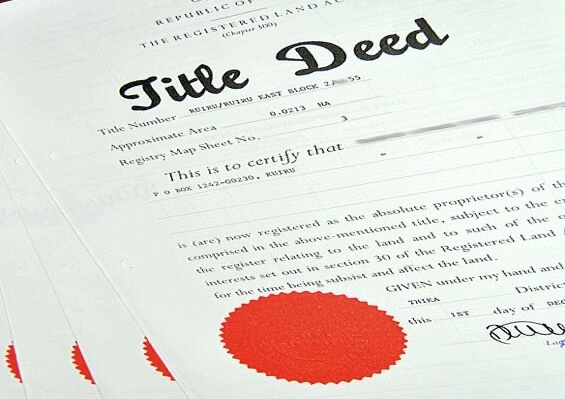
If you do not understand land documents in Nigeria, you are not buying land. You are gambling with your money.
One of the biggest reasons people lose land or get stuck with property they cannot use is poor documentation. Many buyers believe that once payment is made and a receipt is issued, ownership is complete. Unfortunately, that is not how real estate works in Nigeria.
Land ownership is determined by documents, not promises, not receipts, and not verbal agreements. Understanding these documents protects you from fraud, future disputes, and government issues.
In this guide, we break down the key land ownership and property documents in Nigeria, what each one means, when it is needed, and why it matters before you buy land or property.
Types of Land Documents in Nigeria
There are two major categories of documents used for landed property in Nigeria.
First are key ownership or title documents. These show who truly owns the land and whether the government recognizes that ownership.
Second are transactional documents used as evidence of sale. These support ownership and explain how the land was transferred.
Both categories are important, but they serve different purposes.
Key Ownership or Title Documents
These documents establish legal ownership and government recognition of land.
1. Certificate of Occupancy
A Certificate of Occupancy, commonly known as a C of O, is one of the most recognized land titles in Nigeria.
It is issued by the state government and grants the holder the legal right to occupy and use a piece of land, usually for a period of ninety nine years.
In simple terms, it means the government officially acknowledges you as the lawful occupier of that land.
Land with a genuine Certificate of Occupancy is generally considered secure. However, verification is still essential because fake certificates exist. Also, owning a C of O does not automatically mean the land can be transferred freely. Government approval is required, which is where Governor’s Consent becomes necessary.
2. Deed of Conveyance
A Deed of Conveyance is a legal document that proves ownership transfer from one party to another.
It shows that the seller has transferred all rights and interest in the land to the buyer. This document contains the names of both parties, the description of the land, and the agreed purchase price.
Once land is sold, the Deed of Conveyance should be properly registered. Without it, proving ownership in the future can be difficult and legally risky.
3. Excision and Gazette
Excision and Gazette relate to land that was once under government acquisition.
Excision means the government has officially released the land back to the original owners or the community. A Gazette is the official government publication that confirms this release and provides detailed records of the land.
Land covered by a Gazette is considered safer than land with excision alone because it carries stronger government backing. However, it is crucial to confirm that the Gazette actually covers the specific land being purchased.
4. Land Certificate
A Land Certificate is an older land title that existed before the Land Use Act of 1978.
It was issued for registered freehold or leasehold land. Although still valid, it has largely been replaced by the Certificate of Occupancy.
If a land has a Land Certificate, it must be thoroughly verified and checked to confirm its current legal standing under existing laws.
Transactional Documents Used as Evidence of Sale
These documents support ownership, define boundaries, and explain special situations surrounding the land.
5. Survey Plan
A Survey Plan shows the exact location, size, and boundaries of a piece of land.
It also helps confirm whether the land falls under government acquisition or restricted zones. Buying land without a survey plan is extremely risky because you cannot accurately confirm what you are buying or where it is located.
6. Power of Attorney
A Power of Attorney allows someone to act on behalf of the landowner in transactions.
This document must be carefully reviewed to confirm its validity, duration, and the powers granted. Not all Powers of Attorney give full authority to sell land.
7. Deed of Gift
A Deed of Gift is used when land is transferred without payment, such as from parents to children or between family members.
Even though no money is exchanged, proper documentation is still required to prevent future disputes or claims.
8. Deed of Mortgage or Lease
A Deed of Mortgage is used when land is pledged as collateral for a loan.
A Deed of Lease grants temporary rights to use land for a specific period.
Neither of these documents permanently transfers ownership, and buyers must be cautious when land is subject to either arrangement.
9. Grant of Probate or Letter of Administration
When a landowner passes away, a Grant of Probate or Letter of Administration is required to legally transfer property to beneficiaries.
Without these documents, selling or buying inherited land is risky and often illegal. Any transaction involving inherited property must be supported by the appropriate legal authority.
Final Thoughts
Understanding land documents in Nigeria is not optional. It is your first layer of protection as a property buyer.
The more informed you are, the less likely you are to make costly mistakes or fall victim to fraud. Before you commit your money, always verify documents and work with professionals who understand the legal and technical side of real estate.
Safe property purchases start with the right knowledge and the right guidance.
Reach out to us to speak with a property consultant.